I recently constructed a new private siding gate for Chitterne. In this post I’ll describe the issues with the previous gate and the construction of the new gate and rotation mechanism. A second post describes the ridiculously over complex control system which I developed for it.
Requirement and previous installation
At the rear of the layout there is a private military line protected by a single motorised gate. Originally this consisted of a single plastic gate driven via a magnetic clutch from a 9g servo using a Dingo supplied control board.
Issues and improvements
Almost from the start, the gate was unsatisfactory. Motion was “jerky” and irregular with the gate often failing to move through a full 90°. In addition, the gate became distinctly bent and was turned by rotation of the gate post.
I resolved to produce a new gate with the following enhancements:
- A metal gate with realistic dimensions and no potential to bend.
- The gate to hang from its post on functioning hinges and be rotated by a mechanism as unobtrusive as possible.
- A control system to ensure a full 90° of motion.
- Track power to be applied only when the gate is confirmed as fully open.
I decided to retain the servo, clutch and mounting bracket, although in hindsight this might not have been the best plan.
Basic gate structure
To form the gate I used a nickel-silver etch from Wizard which allows the construction of five wooden gates of various sizes. The other four are also used on the layout around the farm.
Each gate is formed two etches soldered together to give the required thickness and 3D effect. I made sure to file down the edges to remove the distinctive etching cusps.
Hinges
The plan was to have a reasonably realistic representation of real gate hinges. I decided to have sockets fixed to the post and pins on the gate with the lower pin extending down into the baseboard to provide the drive.
I constructed the post from 3mm brass bar and then soldered on two cross pieces to represent the hinge mounting plates. I pinned these into place with 0.45mm wire to prevent them moving during the next soldering step.
The sockets and drive mechanism are primarily constructed from some telescopic Albion Alloys brass tubes in 1, 2 and 3mm diameters.
I soldered a length of 2mm tube to the base of the post so it would be hidden below ground level. This formed the outer part of the drive shaft and allowed me to align the other components.
I pushed a length of 1mm tube through the first one and up to the top cross piece where I soldered it on and cut off the end. I then filed the cross pieces and tube section flush. I also thinned the mounting plate to a more realistic thickness and repeated the process for the lower bracket.
Next came the brackets on the gate itself. I first taped a 1mm diameter tube to the end of the gate. A thin strip of brass is wrapped round the tube and soldered to the gate. The tube is then removed and replaced with a length of 0.45mm nickel-silver wire. Finally, with the aid of two small screwdrivers I pushed in the metal strip to clamp the wire which was then soldered. Hopefully the diagram and photo below make this slightly clearer.
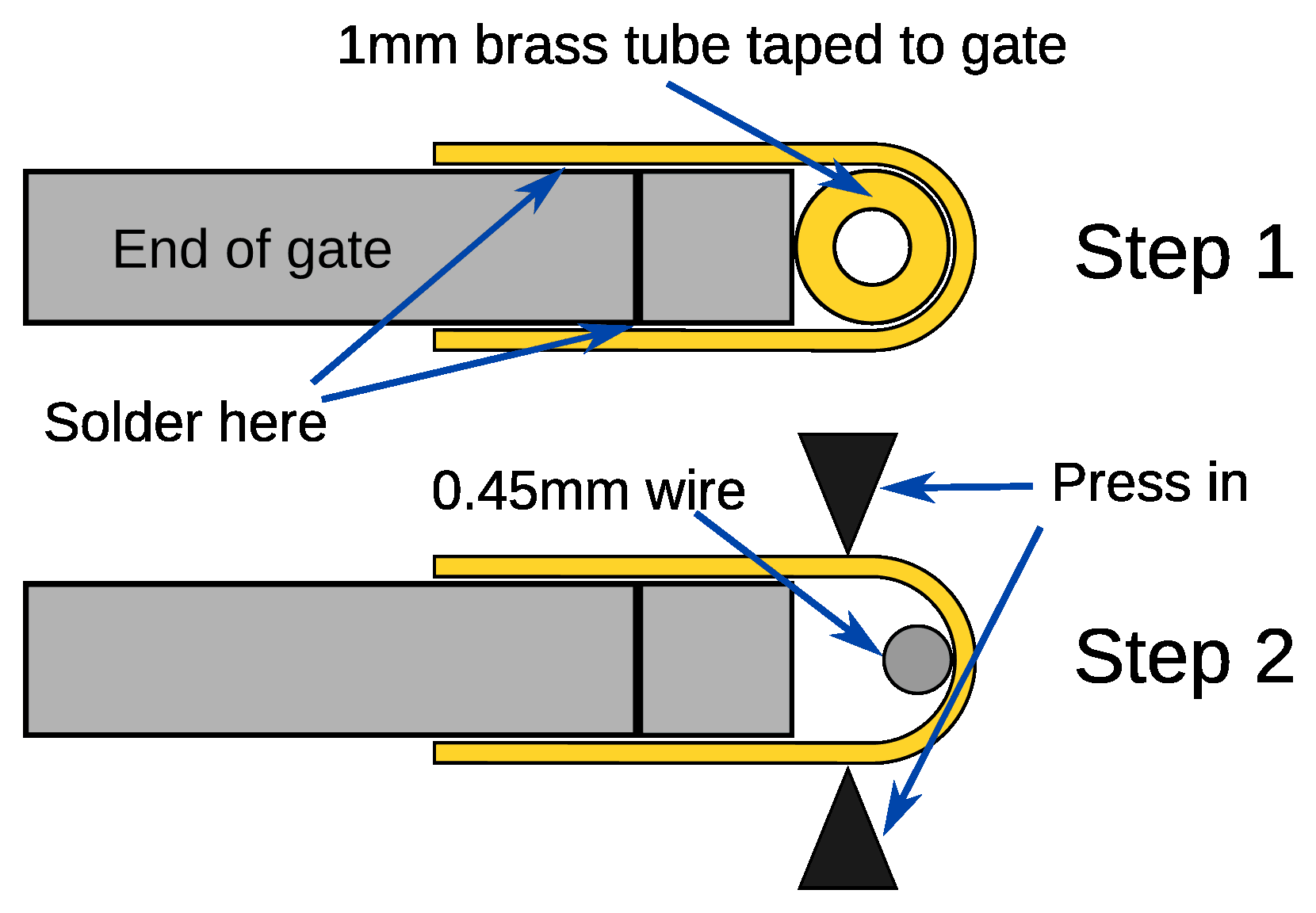
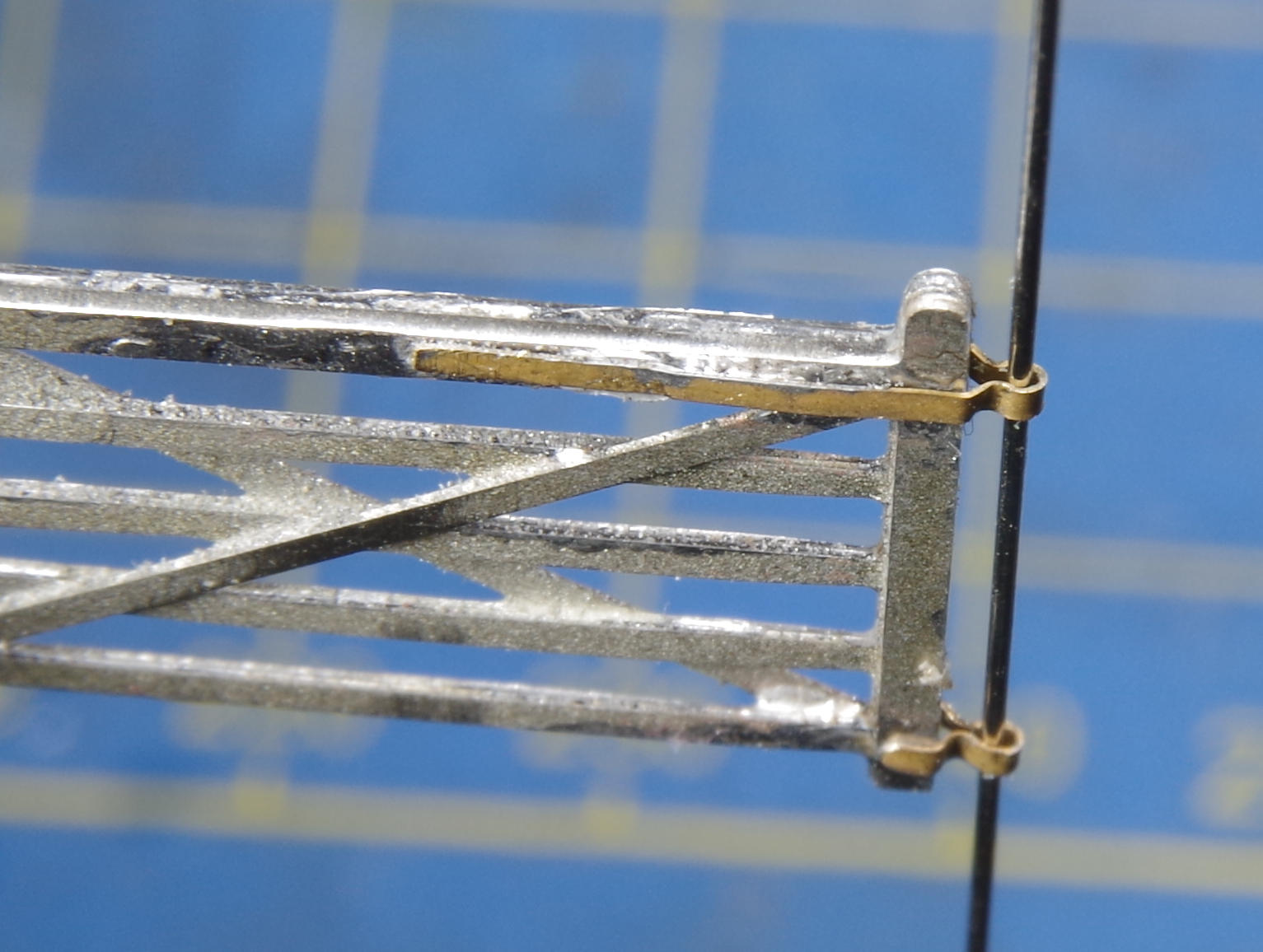
Click for larger images
Drive shaft
For the top hinge I used only a short section of wire, but for the bottom one I used a much longer section which reaches down below ground level. This I soldered to a length of 1mm tube running inside the previously attached 2mm tube to form the main gate drive. I wanted to make sure that the nickel silver wire – which clearly is most susceptible to twisting – was kept as short as possible and used only where the drive has to be hard to see.
I added a short section of 2mm tube at the bottom and then a short sliding length of 3mm to form the final drive connection allowing for variation in the thickness of the base board. Again, the diagram and photo will hopefully make this clearer.
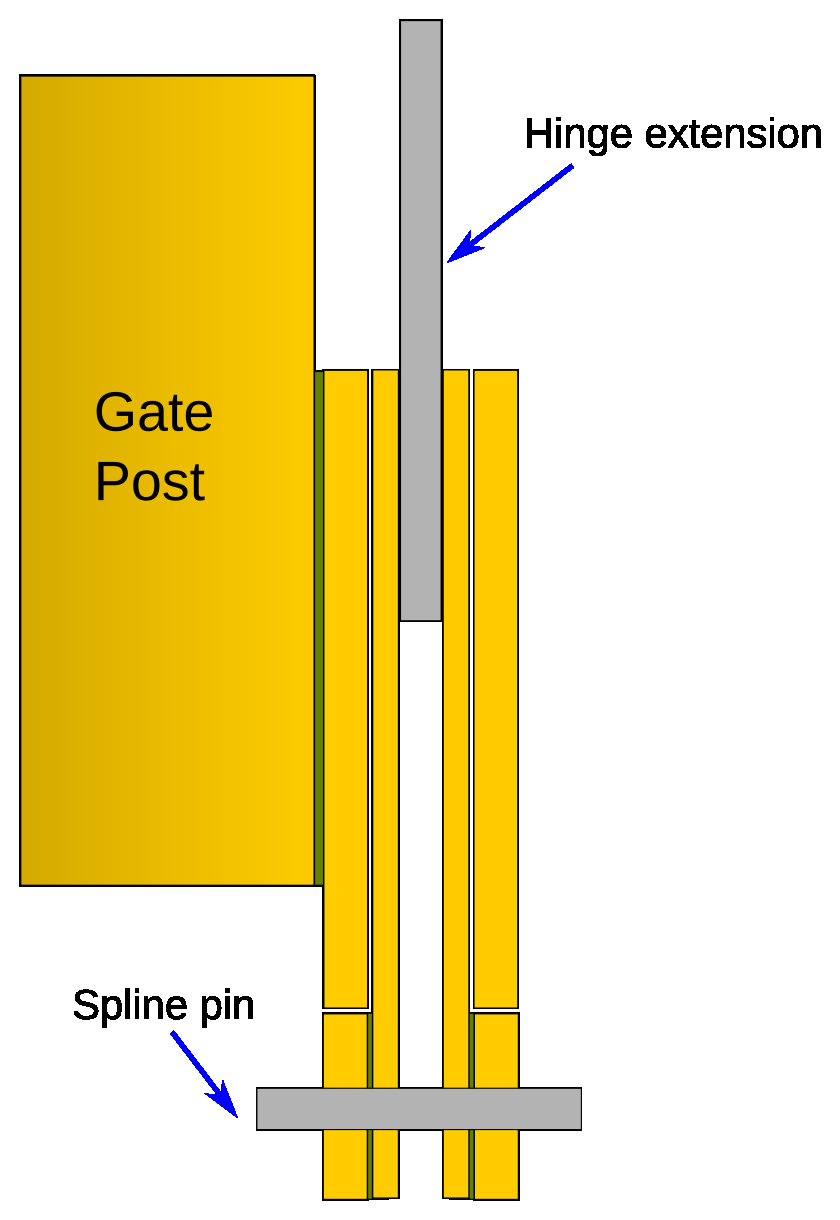
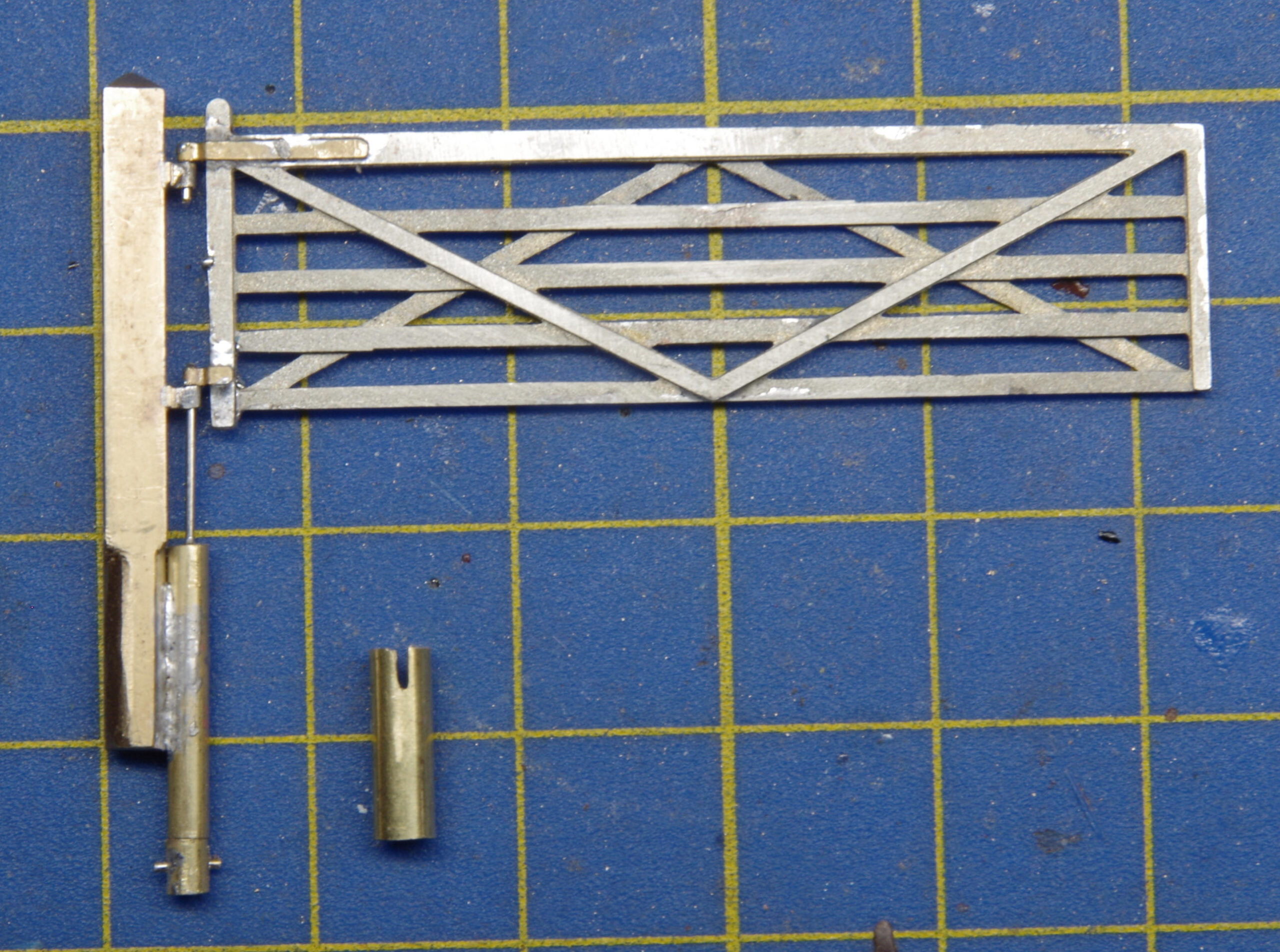
Once the sliding “spline” section was fitted, it was secured with a loop of wire soldered round the top edge to cover the slots.
I used Archer rivet transfers to add “bolts” to the hinges and the gate then just needed to be painted and have the red disks (made from 0.15mm brass) added. I also applied a spot of oil.
Clutch
The original magnetic clutch which relied on the friction between two small magnets turned out to not be stiff enough for reliable operation. After failed experiments with adding emery paper to the surfaces, I made a new clutch from a short length of rubber tube. One end fitted over the cog on the top of the servo and the other end over the spline tube. Friction can be adjusted by moving the spline up and down to vary the amount inside the rubber tube.
This arrangement produced more friction, but does have the disadvantage of introducing some elasticity between the motor and the gate.